The work in brief
Overview
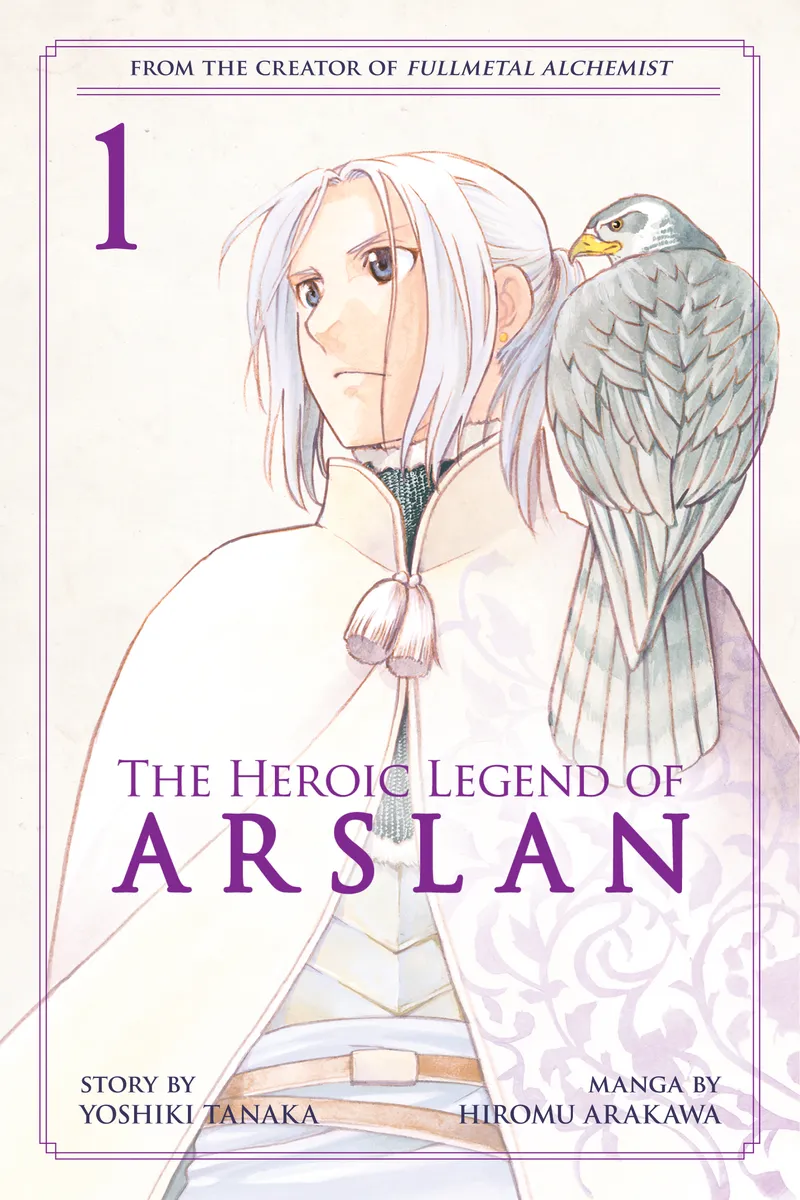
Prince Arslan is 14 when his father’s army is destroyed and his capital, Ecbatana, falls to the neighboring kingdom of Lusitania. The story follows his fight to gather allies and reclaim his throne. Written by Yoshiki Tanaka and illustrated by Hiromu Arakawa (Fullmetal Alchemist) in the manga version, it mixes epic battles with court politics.
On the road
Silk Road & regional elements
- Pars is described as a wealthy country sitting on the “Great Intercontinental Road,” a clear nod to Silk Road trade.
- The story borrows names, religion, and imagery from Persian and Iranian folklore, including polytheistic customs and later religious conflict.
- Cavalry warfare, desert terrain, and turbaned, scimitar-wielding raiders appear as part of the setting’s texture.
- The tale is loosely tied to a real 19th-century Persian court legend about a hero named “Amir Arsalan,” reimagined as fantasy.
Simple rating
Historical & cultural accuracy
Reader path
Why you might like it
- You want big cavalry battles and siege warfare in a Persian-flavored world.
- You like court politics: betrayal, succession, and rebuilding a fallen kingdom.
- You want mythology-inspired worldbuilding without needing history homework first.
- You’re a fan of Hiromu Arakawa’s art from Fullmetal Alchemist.
Watch, read, buy & follow
Official links
All viewing and purchase links go to official publishers, stores, and streaming platforms. Reference databases are clearly labelled. No pirated copies, no shady sites — just direct paths to support the creators.
Official anime site for The Heroic Legend of Arslan
Japanese story, character, staff, broadcast, music, and Blu-ray/DVD information.
Official anime site for The Heroic Legend of Arslan StreamingCrunchyroll for The Heroic Legend of Arslan
Official streaming page for The Heroic Legend of Arslan.
Crunchyroll for The Heroic Legend of Arslan Streaming · RegionalNetflix for The Heroic Legend of Arslan
Streaming page; title availability depends on your country or region.
Netflix for The Heroic Legend of Arslan Publisher · JPWeekly Shōnen Magazine for The Heroic Legend of Arslan
The Japanese manga publisher’s official special page for アルスラーン戦記.
Weekly Shōnen Magazine for The Heroic Legend of Arslan Publisher · ENKodansha English manga series for The Heroic Legend of Arslan
Official English publisher page with a free preview, all available volumes, and print and digital purchase options.
Kodansha English manga series for The Heroic Legend of Arslan Official · SocialOfficial anime X account for The Heroic Legend of Arslan
Official announcements, visual releases, event information, and production updates.
Official anime X account for The Heroic Legend of ArslanLinks checked July 2026 · Reviewed every quarter for availability and publisher changes.
Keep travelling